
What are Native Plant Plugs?
Plugs are small plants grown in packs of 12, in trays that contain 72 plants. The soil plugs are 1.7” wide x 3” deep. These are high-quality native plants that grow extremely fast. Buying plugs instead of pots has several advantages:
More economical at ~$2 per plant
Huge swaths of color in your garden
More sustainable — less plastic and soil
Faster, easier planting (esp. with a 28”L x 1 3/4”W auger)
Economical
✳︎
Sustainable
✳︎
Faster
✳︎
Easier
✳︎
Economical ✳︎ Sustainable ✳︎ Faster ✳︎ Easier ✳︎
-
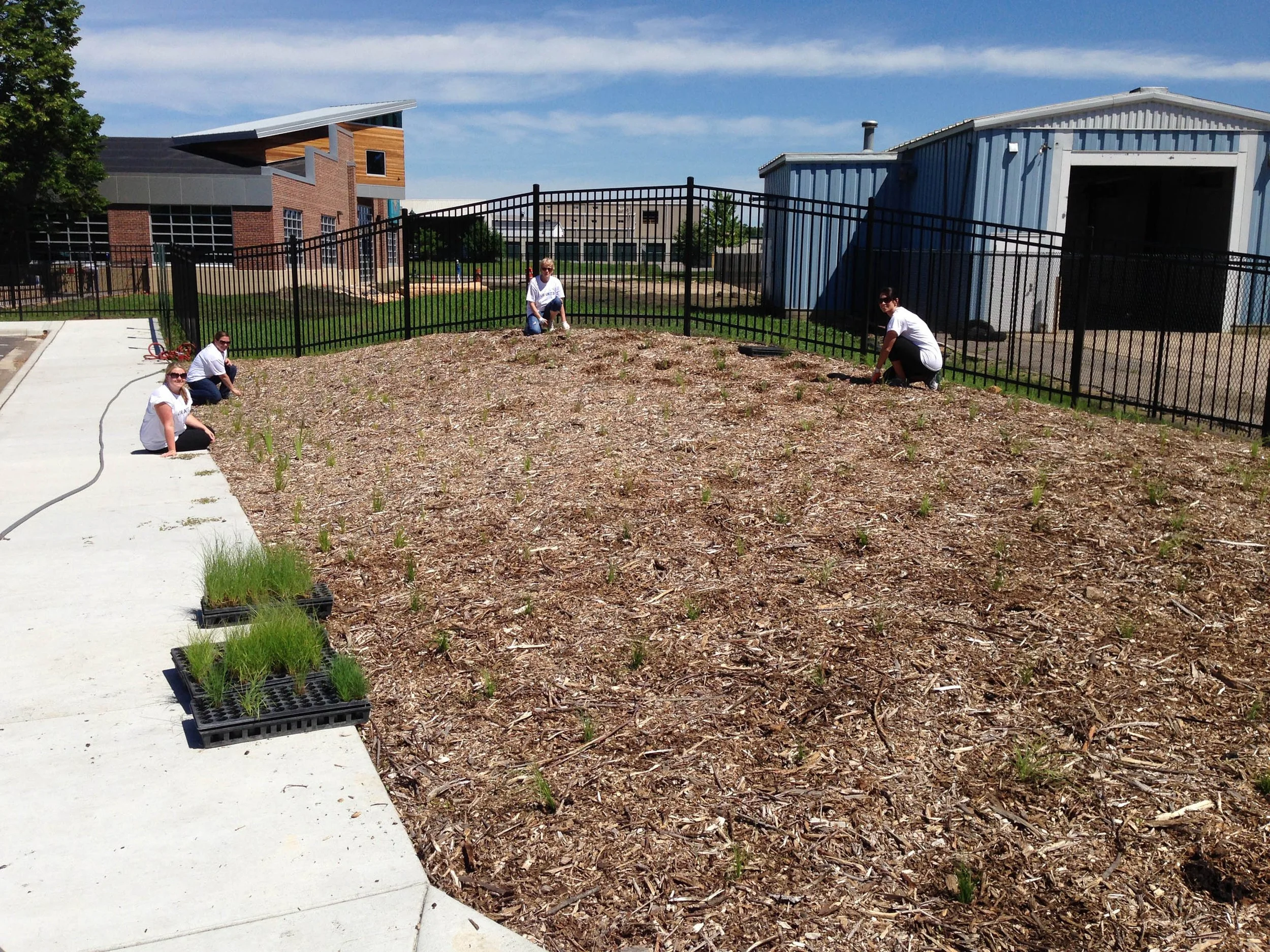
![Four people planting small plants on a large, cleared, mulch-covered area surrounded by a black metal fence, with buildings and a pathway nearby under a blue sky.]()
First Year
-
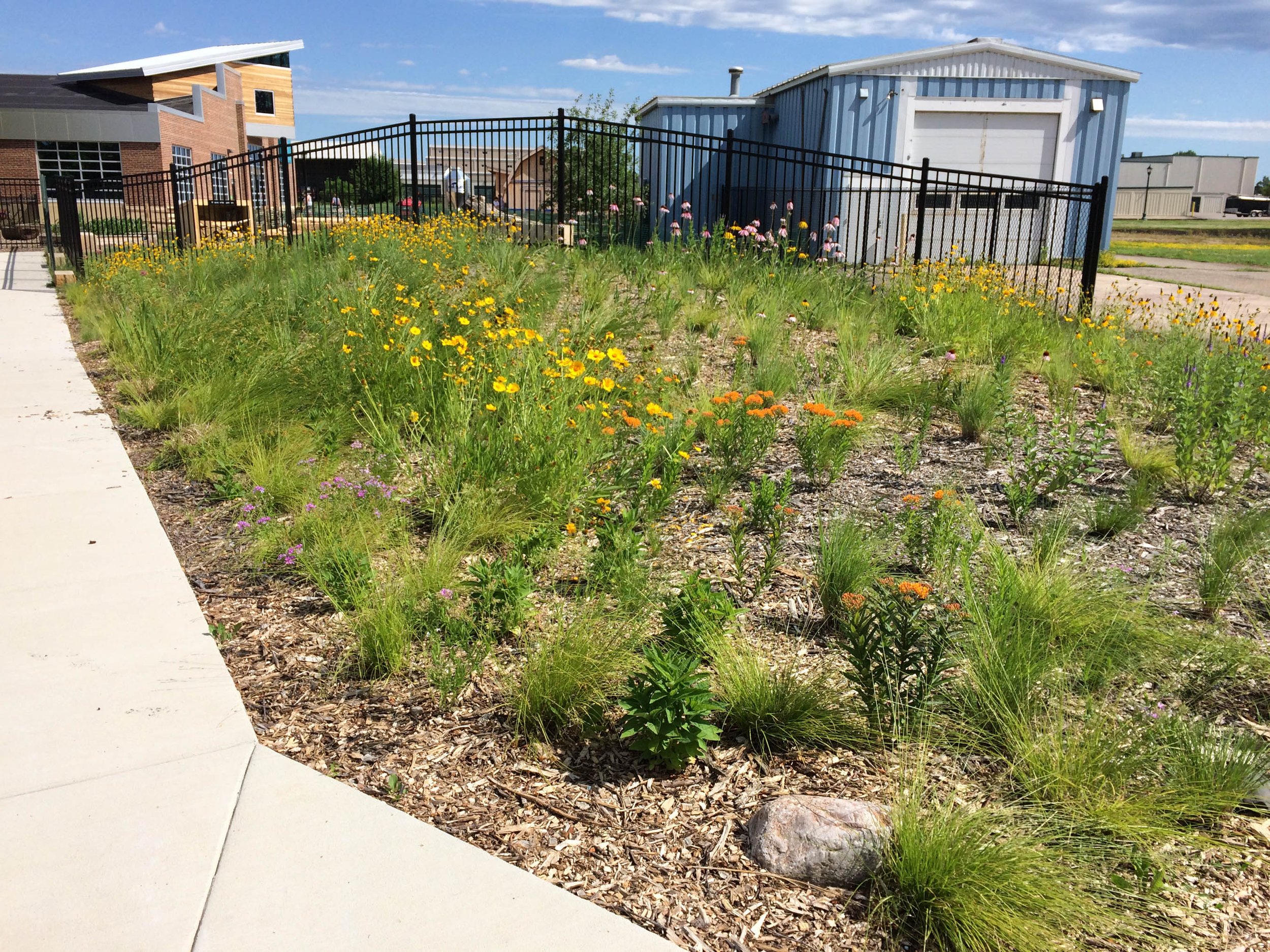
![A sidewalk running alongside a flower bed with yellow, orange, purple, and pink wildflowers, surrounded by mulch, with a black metal fence and a blue and white building in the background under a partly cloudy sky.]()
Second Year
-
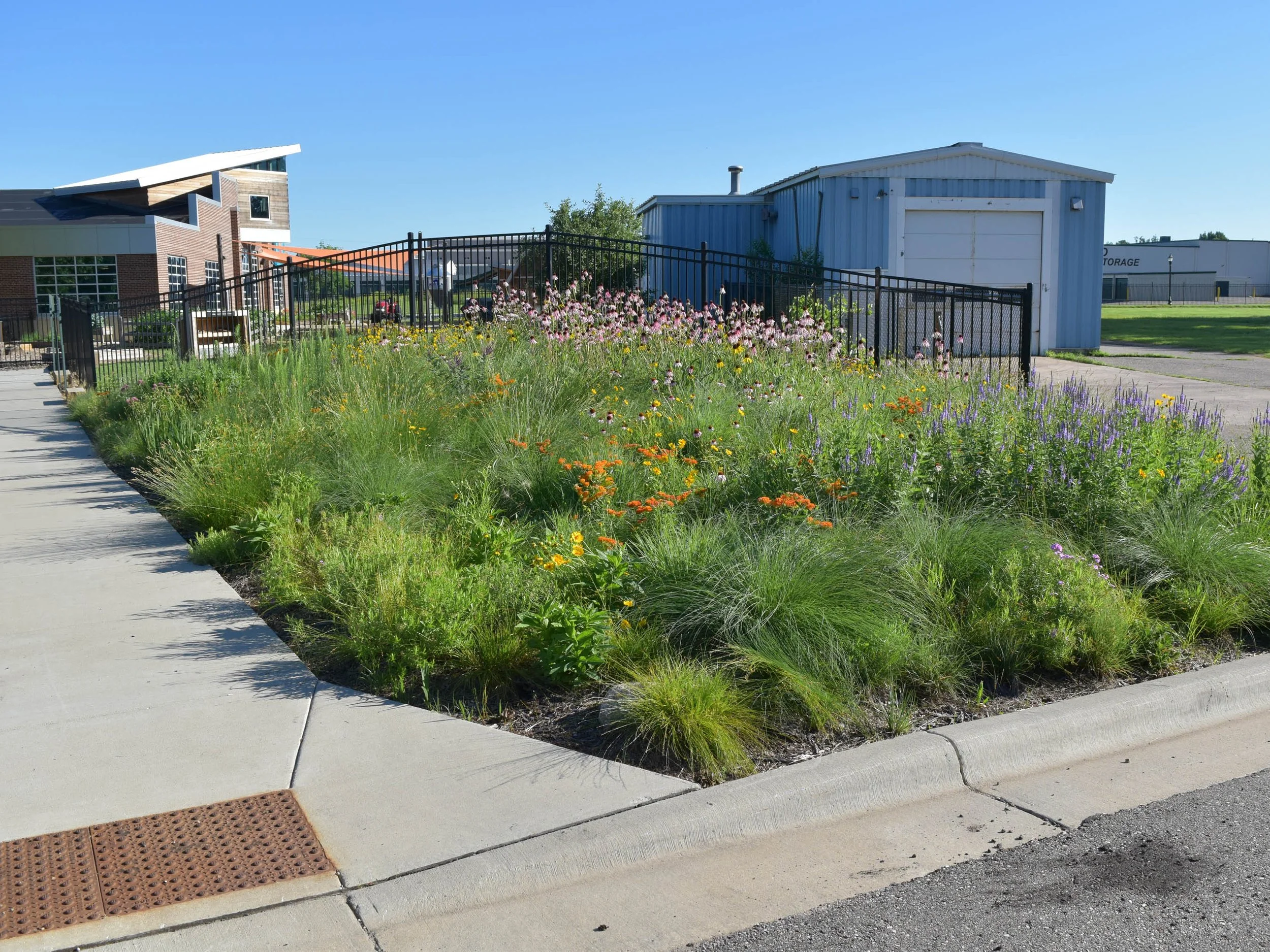
![A landscaped garden bed with colorful flowers and green plants beside a sidewalk, with a blue building and a black metal fence in the background under a clear sky.]()
Fourth Year
-
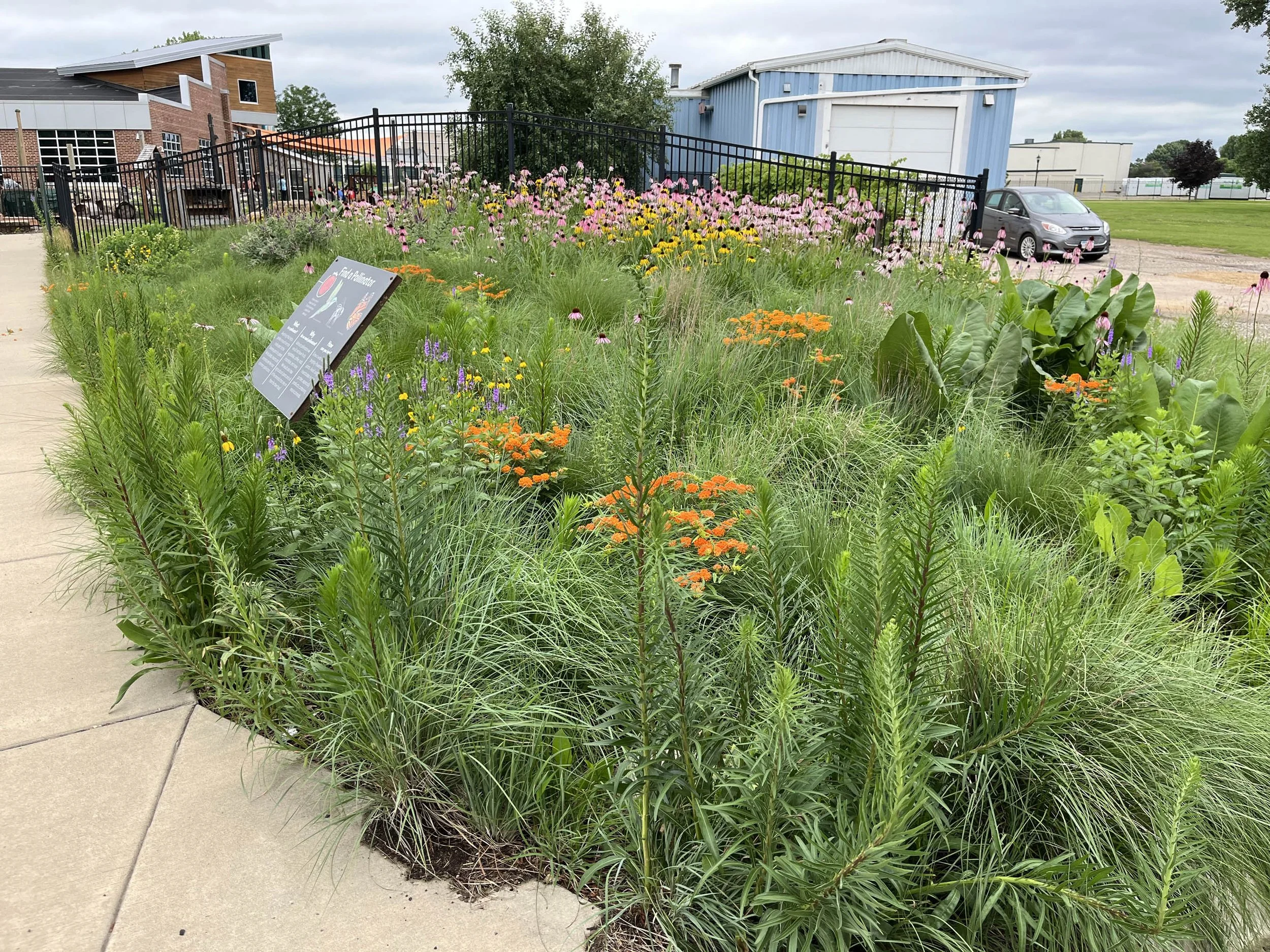
![Flower garden with a variety of colorful flowers, a garden informational sign, and a black metal fence in the background, with buildings and parked cars nearby.]()
Tenth Year
Popular Native Plant Plugs

Can be shipped.
What are plugs? Plugs are plants grown in 72-cell trays; each soil plug is 1.6” wide x 3.2” deep. Read more here.
Ivory Sedge is one of the best shade plants for any garden. It has beautiful fine foliage. The soft, grass-like leaves only grow about 8 inches tall, making it a perfect companion plant for both short and tall flowers. The compact clumps of Ivory Sedge spread slowly to create a soft groundcover. It is also evergreen throughout winter. Ivory Sedge is great for planting along sidewalks, in-between stone pavers, in rock gardens, and among woodland flowers.
You’ll need quite a few Ivory Sedge plugs to fill spaces if you want a groundcover within a few years. 72-plants might seem like a lot, but with a small plant like Ivory Sedge, more is better. If you plant them every 8 inches, that means two plants per square foot. For example, if it’s a 5ft x 5ft space you want filled, you’ll need 50 plants (25sq ft x 2 plants per sq ft = 50 plants total).
Details
Perennial
Sun: Shade, Part Shade, Full Sun
Moisture: Dry, Medium
Height: 8 inches
Blooms: May, June
Color: Green, Gold
Spacing: 8-12″
Spreads: 4” a year by roots
Zones: 3-7
Benefits: Groundcover, Deer Resistant
Design Tips
Plant Ivory Sedge about 6-8 inches apart to create a grass-like groundcover after a few years. Ivory Sedge (Carex eburnea) can be planted in-between stone pavers and flagstones to provide a picturesque woodland path.
Companion Plants
Jacob's Ladder
Wild Blue Phlox
Columbine
Size: 12-pack of plugs, each plug is 1.7” wide x 3” deep
Size: 72-pack of plugs, each plug is 1.7” wide x 3” deep

Can be shipped.
What are plugs? Plugs are plants grown in 72-cell trays; each soil plug is 1.6” wide x 3.2” deep. Read more here.
Meadow Blazing Star is the best wildflower attracting monarchs and pollinators. You will be absolutely amazed by how many monarchs swarm to Meadow Blazing Star flowers in August when it blooms. If you plant it at your house—even in the middle of the city—you will see more monarchs than you ever thought possible. It’s nicknamed “The Monarch Magnet” for good reason.
Milkweed is an important host plant for eggs and caterpillars, but late-summer blooming plants like Meadow Blazing Star provide nectar during the fall migration.
How many should I plant to attract monarchs?
Plant a few and you’ll get a few monarchs each day. Plant dozens and you’ll get dozens of monarchs. Plant hundreds and you’ll get hundreds of monarchs! In our seed production plots with 4,000 Meadow Blazing Star plants, we get thousands of monarchs every day for weeks and they even congregate into huge roosts in the trees at night.
Details
Perennial
Sun: Full Sun, Part Shade
Moisture: Medium-Wet, Medium-Dry
Height: 5 feet
Blooms: Aug, Sept
Color: Pink, Purple
Spacing: 1-2′
Spreads: A little by seed
Zones: 3-7
Benefits: Butterflies, Pollinators, Birds, Hummingbirds
Design Tips
Meadow Blazing Star is incredible in large masses, especially with all the monarch butterflies it attracts. The tall flower spikes of Meadow Blazing Star (Liatris ligulistylis) look great when planted among short grasses and sedges. You will never regret planting too much of this plant, and your neighbors will also benefit from all of the monarchs flying around the neighborhood.
We like planting Blazing Star with Orange Coneflower and Grey Goldenrod—two yellow flowers that bloom at the same time and provide complimentary colors to the pink Blazing Stars.
Great native plant choice for the Minnesota Lawns to Legumes grant program!
Companion Plants
Blue Wild Indigo
Marsh Milkweed
Prairie Blazing Star
Orange Coneflower
Prairie Dropseed
Fox Sedge
Size: 12-pack of plugs, each plug is 1.7” wide x 3” deep
Size: 72-pack of plugs, each plug is 1.7” wide x 3” deep

Can be shipped.
What are plugs? Plugs are plants grown in 72-cell trays; each soil plug is 1.6” wide x 3.2” deep. Read more here.
Little Bluestem is one of the most popular ornamental prairie grasses. Little Bluestem has blue-colored leaves in early summer, changing to a straight column of bronze seed heads in the fall. The seed heads are little white puffs that cover the top and blow gently in the wind. Little Bluestem forms a stiff column of colorful stems in fall that stand up throughout winter, providing year-round color.
Cultivated varieties of Schizachyrium scoparius can be found at garden centers, but the true native variety is usually only found at native plant nurseries. The cultivated varieties can be nice, but they all spread by seed and the offspring will resemble the native species in time.
Details
Perennial
Sun: Full Sun, Part Shade
Moisture: Dry
Height: 3 feet
Blooms: Aug, Sept, Oct
Color: Blue, Red-Bronze
Spacing: 18″
Spreads: A little by seed
Zones: 3-10
Benefits: Ornamental, Butterflies, Pollinators, Deer Resistant
Design Tips
The seed stems on Little Bluestem grow into tight, colorful columns in fall. These columns add a nice touch when scattered in a garden or placed in a drift through the middle of a garden. Little Bluestem (Schizachyrium scoparius) grass tends to spread by seed.
Great native plant choice for the Minnesota Lawns to Legumes grant program!
Companion Plants
Butterfly Milkweed
Prairie Phlox
Prairie Onion
Hoary Puccoon
Rough Blazing Star